
How to Stop Puppy Biting: Why Your Doodle Puppy Nips, Bites, and Gets the "Puppy Frenzy"


If you're searching for how to stop puppy biting, you're not alone — nipping and mouthing are, hands down, the most common complaint new puppy owners bring up in the first few months.
Between razor-sharp puppy teeth and sudden bursts of "puppy frenzy" (also called the zoomies), it can feel like your sweet Goldendoodle or Bernedoodle puppy has turned into a land shark.
The good news: puppy biting is completely normal, temporary, and very trainable.
**[Photo placeholder: Close-up of a Goldendoodle or Bernedoodle puppy playfully mouthing a plush toy — showing appropriate biting behavior.]**
Jump to a Section
Why Do Puppies Bite and Mouth So Much?
🐾 Puppies explore the world with their mouths the way toddlers explore with their hands.
Biting and mouthing typically happen for three reasons:
To explore and learn about new textures, objects, and people
To strengthen their jaws as baby teeth come in and fall out
To initiate play, especially with people and other dogs
From birth through about six months, your puppy's mouth is in near-constant flux as teeth shift — which explains why the urge to chew and bite feels relentless during this stage.
Reading Your Puppy's Energy Zones (and the "Puppy Frenzy")
👉 One of the most useful tools for managing puppy biting is learning to recognize your puppy's energy zone before biting escalates:
Calm zone: relaxed, sleepy, chewing a toy quietly — a great time to bond or groom
Playful zone: attentive and focused — ideal for a short training session
Energized zone: excited, moving quickly, ready to play — channel this into fetch or tug
Over-threshold zone (the "puppy frenzy"): can't focus, won't redirect, biting hard, running in circles — often called the witching hour or FRAP (Frenetic Random Activity Periods)
That last zone — the puppy frenzy (zoomies) — is where most biting complaints come from.
When a puppy hits this point, they aren't being "bad." They're overtired and overstimulated, and their brain genuinely can't process a training cue right now.
The fix isn't more correction; it's a nap. Crate or pen downtime almost always resolves a puppy frenzy episode within minutes.

How to Stop Puppy Biting: The Interrupt, Redirect, Train Method
✨ The most effective, force-free approach to stopping puppy biting follows three simple steps:
Interrupt the biting without yelling or giving extra attention — a simple "uh-uh" or exhale sound works
Redirect to an appropriate toy or activity
Train a better behavior (like a sit) and reward it immediately
Timing matters more than the correction itself.
If you can anticipate biting before it starts — for example, offering a toy right as your puppy runs up excited — you prevent the rehearsal of the unwanted behavior altogether, which is far more effective than reacting after the fact.
Teaching Your Puppy That Toys (Not Hands) Are for Biting
Puppies bite hands and ankles partly because people are fun to play with — the giggling, quick movements, and reactions are all rewarding to a puppy.
Reversing this means consistently redirecting play onto toys:
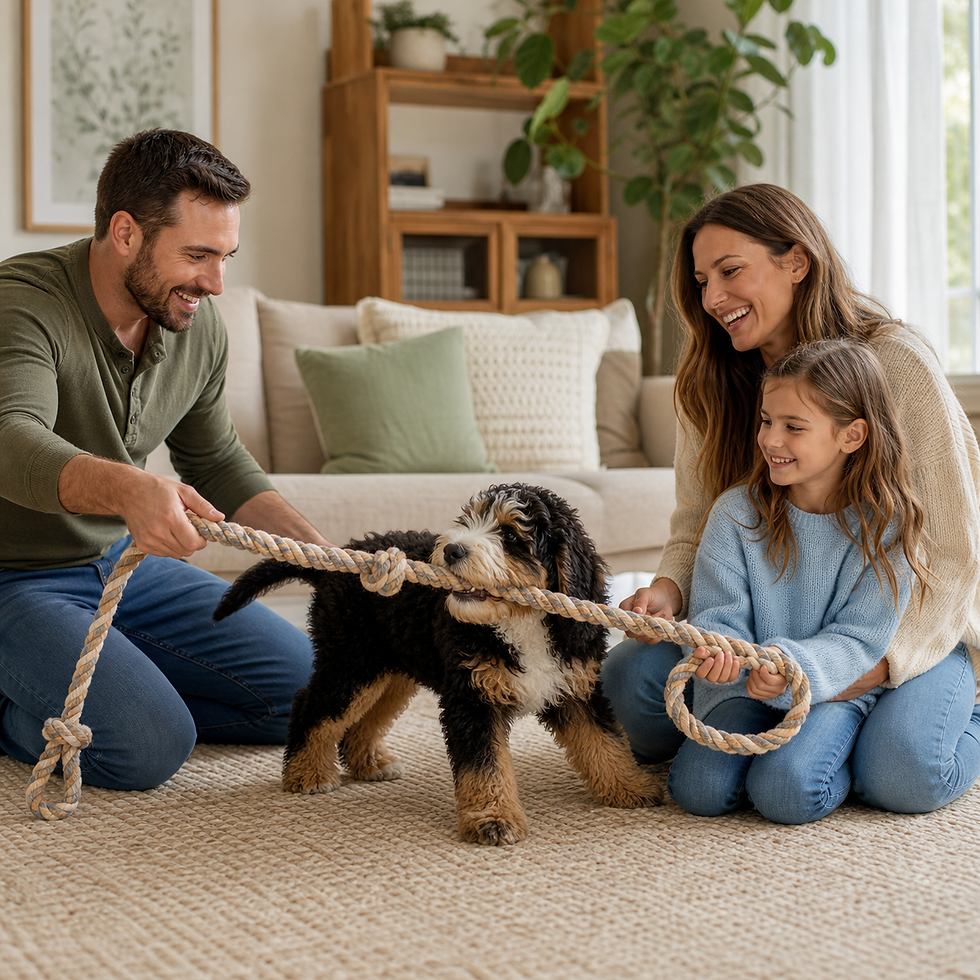
Choose large plush toys or long rope toys so your hands stay out of the play zone
Animate toys with short, unpredictable movements to make them more exciting than your hands
If your puppy bites you instead of the toy, immediately end the game and calmly walk away — this teaches that gentle play keeps the fun going
👋 Hands are not toys. Practicing calm, still hands around your puppy (rather than quick petting movements) reduces the temptation to mouth in the first place.
Managing Puppy Nipping Around Kids
Puppy biting around children deserves extra structure, since kids' quick movements and high-pitched reactions can escalate a puppy fast.
Best practices include:
No unsupervised free play between puppies and young kids
Teach kids to ask for a sit before greeting or petting
Keep a toy on hand at all times for redirection
Structure playtime around games and training rather than roughhousing
When to Just Let Your Puppy Nap
💤 If your puppy has hit the over-threshold "puppy frenzy" zone, training tools won't help — what they need is rest.
Puppies typically need 16–18 hours of sleep in a 24-hour period, and a lot of biting complaints resolve simply by building more consistent nap breaks into the day using a crate or pen.
What Not to Do When a Puppy Bites
⚠️ Punishing a puppy for biting or growling tends to backfire, often increasing anxiety or intensifying the behavior rather than reducing it.
Likewise, yelling, pulling hands away quickly, or wrestling with your puppy all read as fun to a puppy's brain — even negative attention is still attention.
For more hands-on, step-by-step help working through the biting phase — including specific games for building bite inhibition and impulse control — Doodling All Day recommends the Baxter & Bella training program, which many of our puppy families use starting the week they bring their puppy home.
Use code DOODLINGALLDAY for 25% off lifetime training packages.
Frequently Asked Questions About Puppy Biting
Why does my puppy bite so hard during the "witching hour"?
The evening "witching hour" or puppy frenzy is a normal burst of pent-up energy, often worsened by overtiredness. Puppies in this state can't focus or redirect easily — a nap in the crate or pen typically resolves it faster than continued play or correction.
Is puppy biting a sign of aggression?
Almost never in young puppies. Loose, bouncy movement with open mouths and even play growling is normal puppy play — true aggression involves freezing, stiffening, and guarded body language, which looks very different.
At what age do puppies stop biting?
Most puppies significantly reduce biting between 6 and 9 months as adult teeth finish coming in, though the timeline varies by individual puppy and how consistently biting has been redirected during the teething months.
How do I stop my puppy from biting my kids?
Supervise all interactions, teach kids to ask for a sit before petting, and keep toys on hand for redirection. No unsupervised roughhousing between puppies and children, especially during the biting-heavy first few months.
Does ignoring my puppy stop biting?
Withdrawing attention (standing up, crossing arms, turning away) can help remove the reward of engagement, but it works best paired with redirecting to a toy or a trained behavior — simply standing there while a puppy continues biting isn't an effective strategy on its own.

Comments