
New Puppy Schedule FAQ: How to Structure Your Goldendoodle or Bernedoodle's Day


New Puppy Schedule FAQ: How to Structure Your Goldendoodle or Bernedoodle's Day
One of the most reassuring things you can give a new puppy isn't a fancy toy or the perfect crate — it's a predictable routine. Dogs thrive on structure, and a good schedule prevents most of the accidents, overtired meltdowns, and behavior struggles new owners run into. Here are the scheduling questions we hear most.
Jump to a Section
What does a typical daily schedule look like for a new puppy?
A simple rhythm works best: potty break, then playtime or training, then crate/rest time — repeated throughout the day. A sample day might run: 6am wake and potty, 7am breakfast and a short training session, 9am crate time, 11am potty and a second training session, 1pm crate time, 3pm potty and play, 5pm crate time, 7pm dinner and a final training session, 10pm bedtime. The exact times matter less than the pattern.
How much sleep does a puppy actually need?
More than most new owners expect — generally 16 to 18 hours in a 24-hour period. If your puppy seems cranky, bitey, or "frenzied," an overlooked nap is often the reason. Puppies who don't get enough rest tend to act out, similar to overtired toddlers.
How often should I feed my puppy?
Most puppies do well on a schedule your vet recommends — commonly two main meals (morning and evening) with a portion set aside throughout the day as training rewards. Avoid free-feeding (leaving food out all day), since it makes housetraining significantly harder to predict and manage.

Should I limit water access?
Offer water first thing in the morning and allow access throughout the day, but remove it about two hours before bedtime to help reduce overnight accidents. Water shouldn't be left in the crate, though it's fine in an exercise pen during supervised time.
How long should training sessions be?
Short and frequent beats long and rare. Aim for 5 to 15 minutes per session, spread across the day — morning, afternoon, and evening — rather than one long session that leads to frustration or overstimulation on both ends of the leash.

How much playtime does my puppy need between rest periods?
A helpful rule of thumb is about 15 to 20 minutes of active play followed by 40 to 45 minutes of rest. Rest doesn't have to mean the crate — lap time, calm handling, or a chew toy nearby all count, as long as the energy comes back down before the next active stretch.

How often should potty breaks happen?
During the day, plan on taking your puppy out every 15 to 20 minutes during active periods, and always after waking up, after meals, and after play. As your puppy goes longer stretches without accidents, you can start stretching that interval — but early on, more frequent trips prevent far more accidents than they cause hassle.
Should I wake my puppy up at night for a potty break?
If your puppy is sleeping soundly, let them sleep — don't wake them just to be safe. If they're new to overnight crating, expect one or two wake-ups in the first weeks, gradually stretching later into the night. Keep those breaks calm and boring: straight out, potty, straight back in, no play.
How much exercise should be built into the schedule?
This varies by age, breed size, and your puppy's individual energy level, but a general range is 30 minutes to 2 hours a day, spread across multiple shorter sessions rather than one long outing. Check with your vet for guidance specific to your Goldendoodle or Bernedoodle's growth stage, since too much high-impact exercise too early can be hard on developing joints.
What if I work outside the home — how does the schedule change?
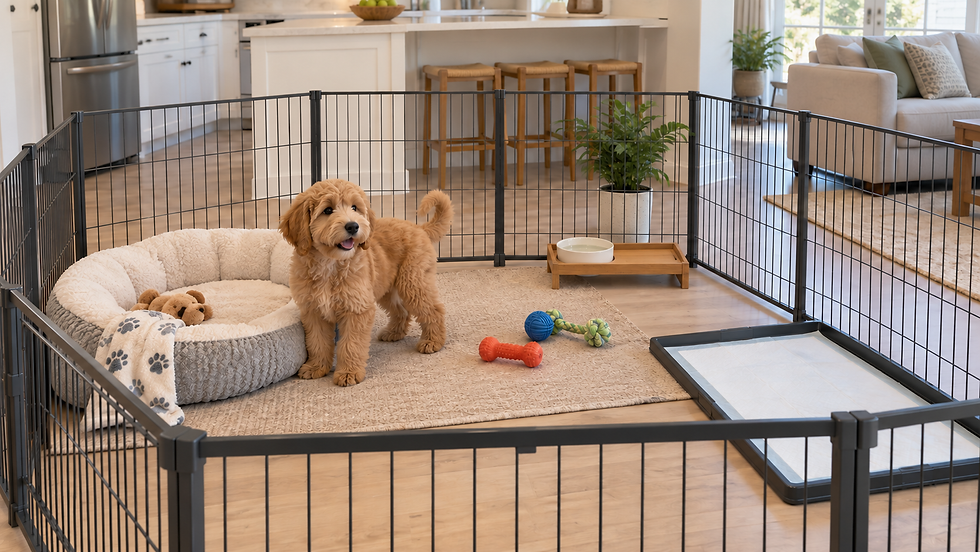
Set your puppy up in a safe, escape-proof pen with a designated potty corner, a comfortable bed area, water, and safe chew toys. If possible, arrange a midday visit from a friend, neighbor, or pet sitter for a potty break and some play — young puppies need more frequent breaks than a typical workday allows.
When should exciting play happen versus calm activities?
Save higher-energy play, walks, and training for earlier in the day, and shift toward calm, low-key activities — like gentle handling or quiet chew time — in the two to three hours before bedtime. A puppy who gets wound up right before bed often struggles to settle, even if physically tired.
How rigid does the schedule need to be?
Consistent, not rigid. The goal is a predictable pattern your puppy can count on — same general wake time, same rhythm of potty/play/rest — not a minute-by-minute military schedule. Puppies (and owners) both do better with some flexibility built in around a reliable structure.
Want a Ready-Made Schedule Instead of Building Your Own?
Our recommended training partner, Baxter & Bella, includes printable daily and weekly puppy schedules as part of their training curriculum — one less thing to figure out on your own.
Doodling All Day families get 25% off their lifetime program with code DOODLINGALLDAY.
Want a full breakdown with sample schedules by week?
Check out our Puppy Daily Schedule guide for a complete first-month framework.


Comments