
Puppy Biting, Chewing & "Puppy Frenzy" FAQ: Why It Happens and What Actually Helps

Puppy Biting, Chewing & "Puppy Frenzy" FAQ: Why It Happens and What Actually Helps
Between the razor-sharp teeth, the sudden bursts of zoomies, and the sofa cushion casualties, the first few months with a puppy can feel like managing a tiny, adorable chaos machine. Here are the real questions we hear from Doodling All Day families about biting, chewing, and "puppy frenzy" — answered honestly.
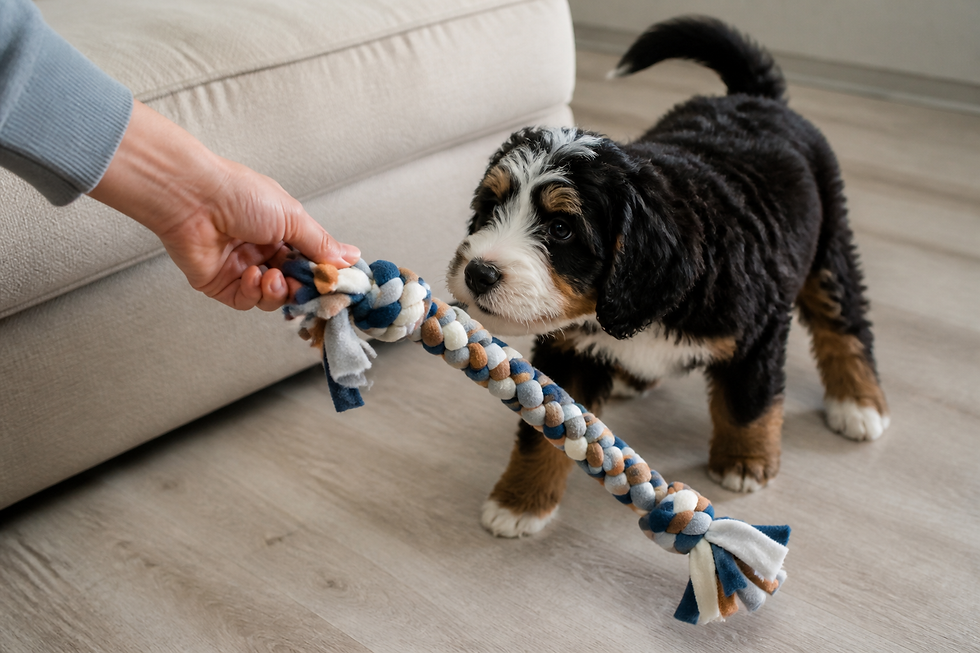
*[Image placeholder: Bernedoodle puppy chewing a rope toy, alt text: "Bernedoodle puppy playing with an appropriate chew toy"]*
Puppy Biting, Chewing & "Puppy Frenzy" FAQ:
What is "puppy frenzy," and why does my puppy suddenly go wild?
How do I know if my puppy is "too worked up" to train or play calmly?
What toys actually work for a puppy who bites and chews everything?
Should I pull my hand or clothing away when my puppy bites it?
My puppy is 5 months old and still very mouthy — is that unusual?
Why does my puppy bite so much?
Puppies bite for three main reasons: to explore the world (their mouth is basically their hands), to strengthen their jaws as new teeth come in, and to initiate play the way they would with littermates. Biting isn't aggression at this age — it's normal puppy behavior that needs redirecting, not punishing.

What is "puppy frenzy," and why does my puppy suddenly go wild?
That sudden burst of running in circles, jumping, and mouthing everything in sight is often called FRAP (Frenetic Random Activity Period), or "zoomies" — it's a normal release of pent-up energy. It commonly shows up first thing in the morning, after eating, after crate time, in the evening, or after a bath. If it seems excessive, try splitting meals into smaller, more frequent portions throughout the day.
How do I know if my puppy is "too worked up" to train or play calmly?
Watch whether your puppy can still focus. If they can sit, make eye contact, or redirect to a toy, they're still in a workable state. If they're bouncing off the walls, biting harder, and completely ignoring you, they've likely crossed into an overtired, over-threshold state — and what they need isn't more correction, it's a nap. Crate or pen them for downtime rather than trying to power through.

Why does my puppy bite harder when we're playing?
Excitement escalates biting fast. The fix isn't to keep playing through it — it's to stop the second teeth touch skin. Stand up, cross your arms, and ignore your puppy for a minute or two (no talking, no eye contact). Biting should reliably end the fun; that's how puppies learn that gentle mouths keep the good times going.
Is it normal for my puppy to bite my kids more than adults?
Yes, unfortunately — kids tend to move quickly, react loudly, and pull their hands away fast, all of which puppies find irresistible and exciting to chase. The fix is teaching kids to stay calm and slow around the puppy, always offer treats with a flat palm, and never engage in unsupervised roughhousing. An adult should always be present to redirect biting toward a toy.
Why does my puppy chew on furniture, baseboards, and shoes?
Puppies chew because they're teething, because it's mentally satisfying, and because — left to their own devices — they'll chew whatever is available. If you haven't offered an appropriate outlet nearby, your baseboards are it. The fix is management: puppy-proof what you can, and always have a chew toy within arm's reach to redirect to the moment you see interest in the wrong item.
What toys actually work for a puppy who bites and chews everything?
Match the toy to the item they're drawn to — a soft plush toy for puppies going after pillows or clothing, and a hard chew (like a Benebone or antler) for puppies gnawing on furniture or table legs. Large plush toys that resemble a littermate tend to be great starter toys for redirecting mouthy play.
Should I pull my hand or clothing away when my puppy bites it?
No — quick pulling motions actually excite puppies further and turn it into a game of chase. Instead, stay still, remove attention (no yelping or dramatic reactions), and calmly redirect to a toy. If your puppy grabs pant legs or sleeves, keep a long toy nearby to drag and redirect their bite onto instead.
Is my puppy being aggressive, or is this just play?
Almost always, it's play. Playful biting comes with loose, bouncy, "noodle-like" body movement and an open, relaxed mouth — even growling is usually part of the game. True stress or aggression looks different: freezing, stiffening, staring, pinned-back ears, or a tightly closed mouth. If you're seeing those signs, it's worth pausing the interaction and giving your puppy space.
How long does the intense biting and chewing phase last?
Most puppies are in near-constant "mouth mode" from about 8 weeks until 6 months old, while baby teeth fall out and adult teeth come in. It does get better — consistent redirection now (rather than punishment) sets your puppy up to grow out of it on schedule instead of carrying the habit into adolescence.
Will punishing my puppy for biting make it stop faster?
It usually backfires. Puppies who are yelled at or physically corrected for biting often become more anxious, more unpredictable, or bite harder out of confusion or fear. The most effective approach is consistent redirection: interrupt without giving attention, redirect to something appropriate, and reward the better choice.
My puppy is 5 months old and still very mouthy — is that unusual?
Not necessarily, but at this age teeth-on-skin contact should be stopping completely. Go back to basics: practice touch-and-treat exercises to desensitize your puppy to hands and movement, keep structured training sessions going, and make sure they're getting enough physical and mental outlets. A puppy playdate can also help — some puppies need another dog to satisfy their mouthy play drive.
Want a Structured Plan Instead of Trial and Error?
Biting and chewing respond really well to a consistent, step-by-step approach — which is exactly what our recommended partner Baxter & Bella offers.
Doodling All Day families get 25% off their lifetime training program with code DOODLINGALLDAY, including a full class specifically on puppy biting.


Comments